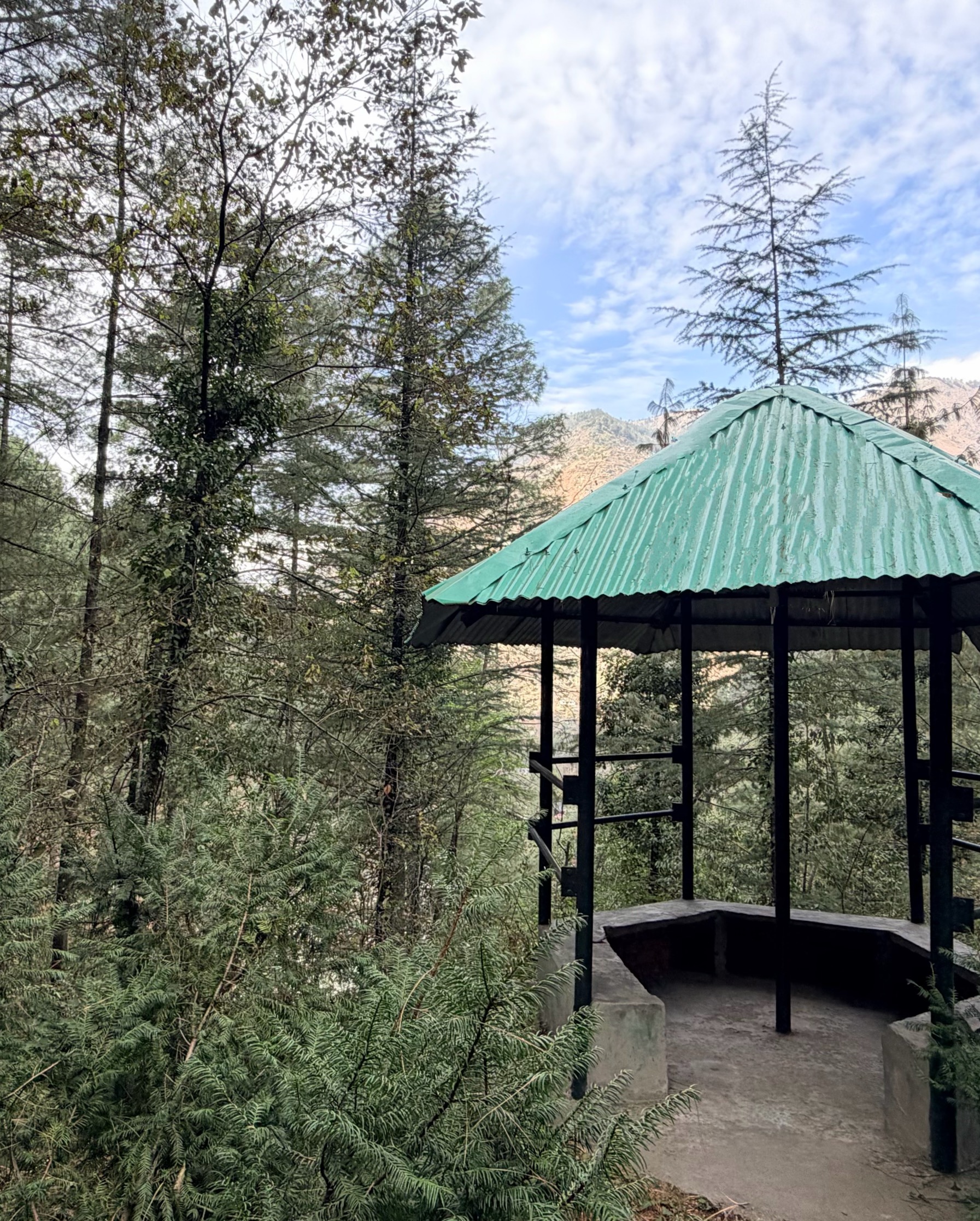
Here is the most counter-intuitive thing we ask of people who travel with us: that they spend an hour each day alone, with no phone, no plan, and not much to do. We give them a small booklet with a few prompts, point them toward a particular rock or a particular tree, and leave. That's it. That's the session.
When I describe this to people, a certain kind of traveller looks at me as though I'm trying to sell them an empty room. They've paid to go somewhere; why would they want to sit still? But the people who have actually done it come back saying something I didn't expect to hear so often, and so plainly: the hour alone was the best part.
What we got wrong the first time
I'll be honest about the first journey. We had planned a stillness session for every day — it was always meant to be a daily anchor, not an optional extra. What we hadn't planned for was the weather. It rained for much of the week, and sessions that called for sitting quietly outside got cancelled or moved. In the end, we managed two proper sessions across five days.
Those two were enough to tell us everything. Three of the six told us, unprompted, that they had wanted more of it. Not less. More. And the two who had done it said it was among the things they'd carry home from the week.
That response sharpened the design of every journey since. The daily stillness hour is no longer weather-permitting, or squeezed in if the day runs long. It is a fixed part of the schedule, the way lunch is. We protect it as carefully as we protect anything — because we know what people lose when we can't deliver it.
I realised it is possible to detach from dopamine-seeking behaviour and genuinely give yourself time to think.
That's Mainak, who travelled with us to Tirthan. His favourite moments, he said, were the stillness sessions — one among the trees, one alone on a rock by the river. He came for a connection with the Himalayas and left with a small, portable discovery about his own attention.
Why it has to be designed
You might reasonably ask: if stillness is so good, why not just leave people free time and let them find it? We tried versions of that. It doesn't work, for the same reason a gym membership doesn't make you fit. Given unstructured time, an urban mind reaches for its phone, or for company, or for a task. The point of the booklet and the appointed spot and the one-hour frame is not ceremony. It's friction in the right direction — just enough structure to make doing nothing feel permitted.
The prompts follow a gentle arc across the week. The early days are about arriving — letting the noise settle. The middle days notice what's there. The later days ask quieter, more honest questions, the kind that only surface when you've been off the treadmill for seventy-two hours. By the last day it's less an exercise than a habit nobody wants to give up.
We are not a meditation retreat, and we don't promise transformation. What we've found is simpler and more reliable than that. Give a person a beautiful place, a comfortable silence, and a daily hour with no agenda, and the landscape does the rest. It enters them. That is the whole quiet machinery of a Fallow journey, and the hour on the rock is its engine.
— Kunal Shah, founder of Fallow Journeys. You can read more about how we balance structure and space on the philosophy page.
Get Field Notes in your inbox — slow writing from the landscapes we travel through, never more than twice a month.